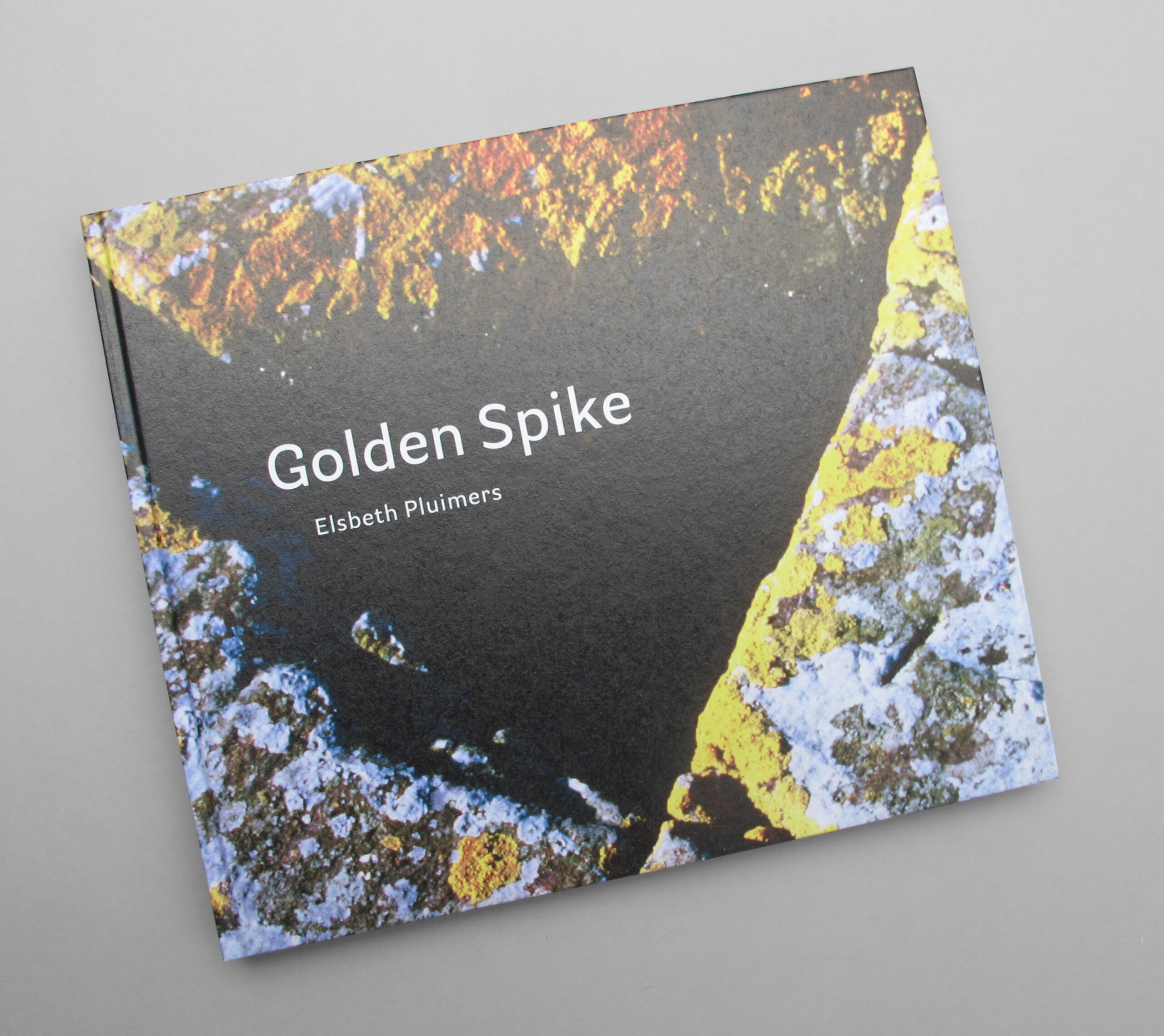
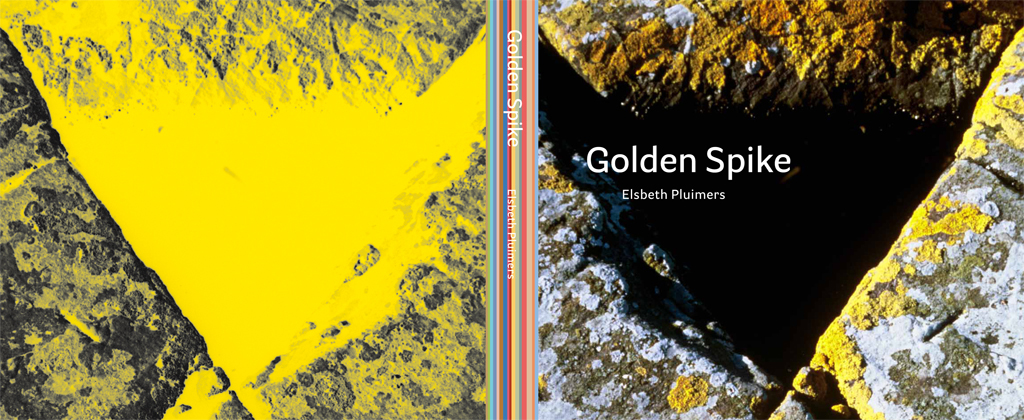
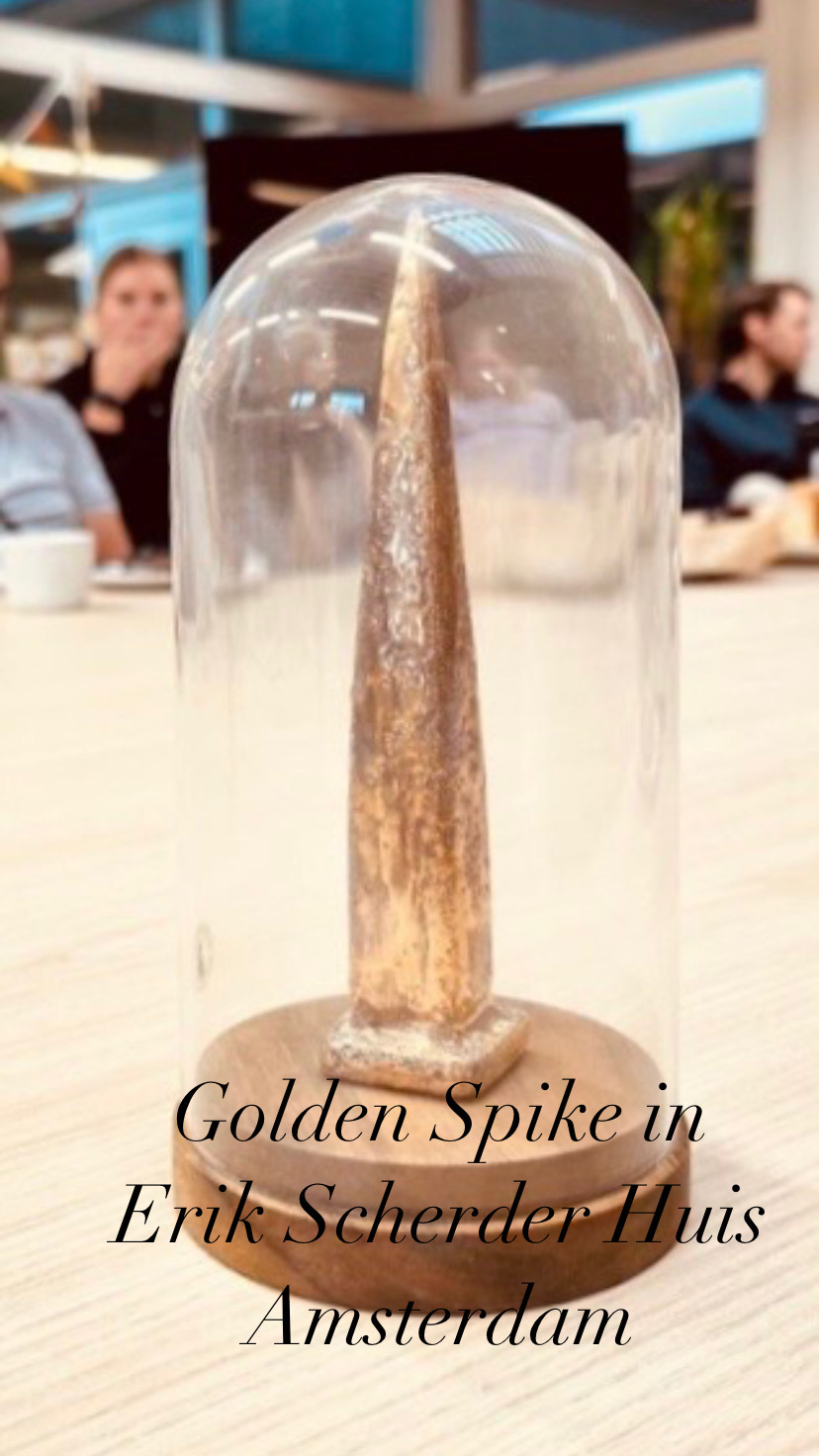
‘Golden Spike‘
On the origin of an Image Language
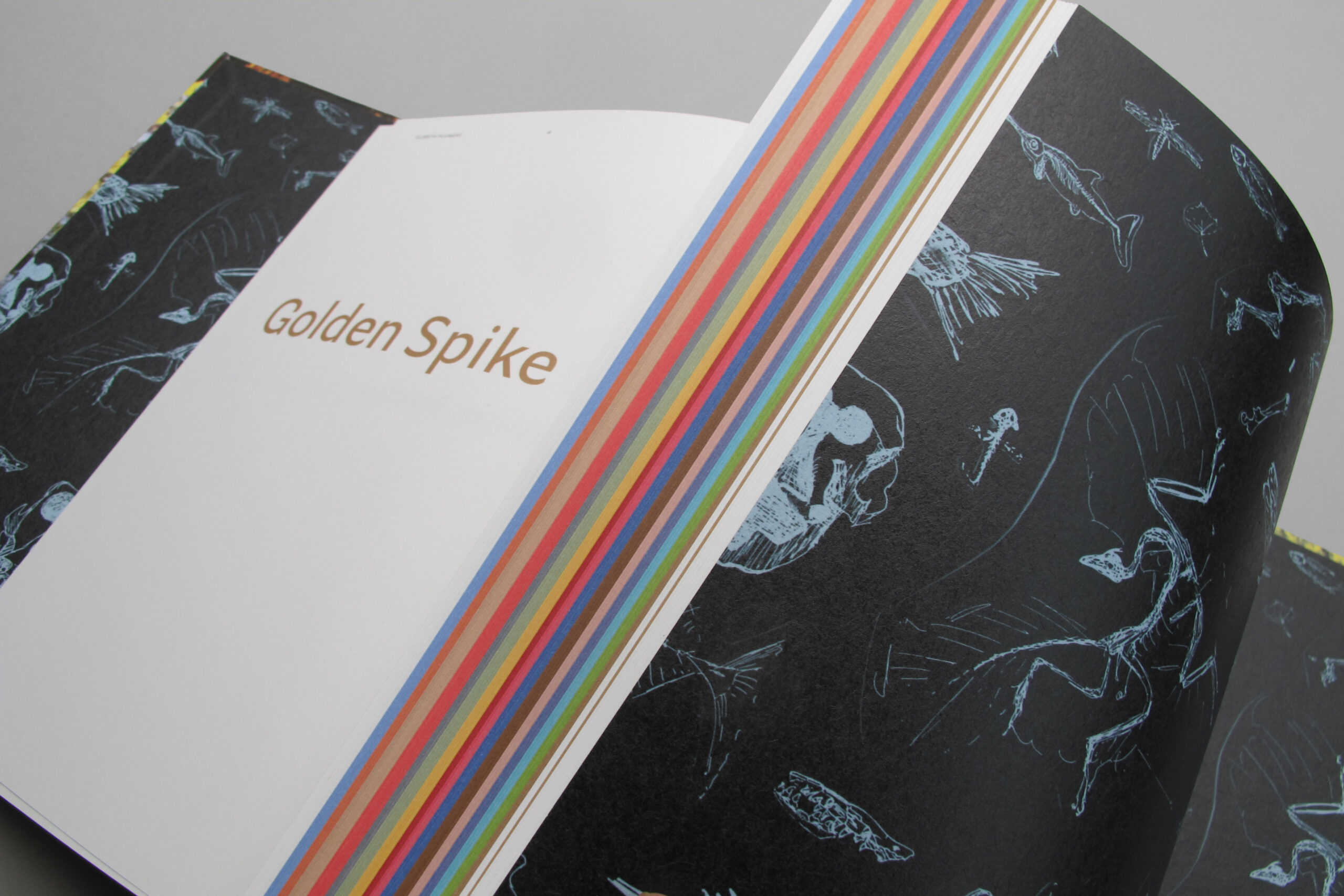
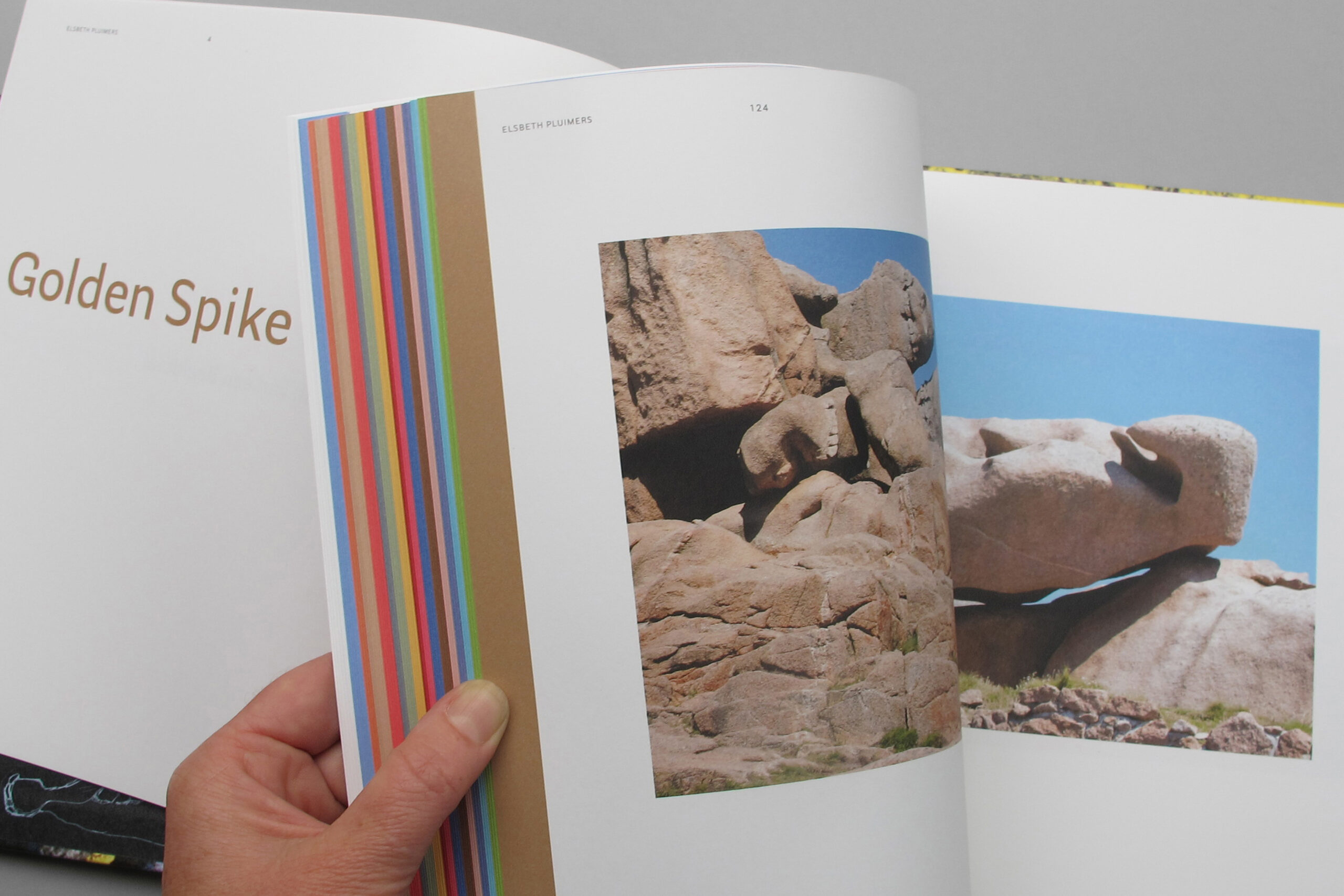
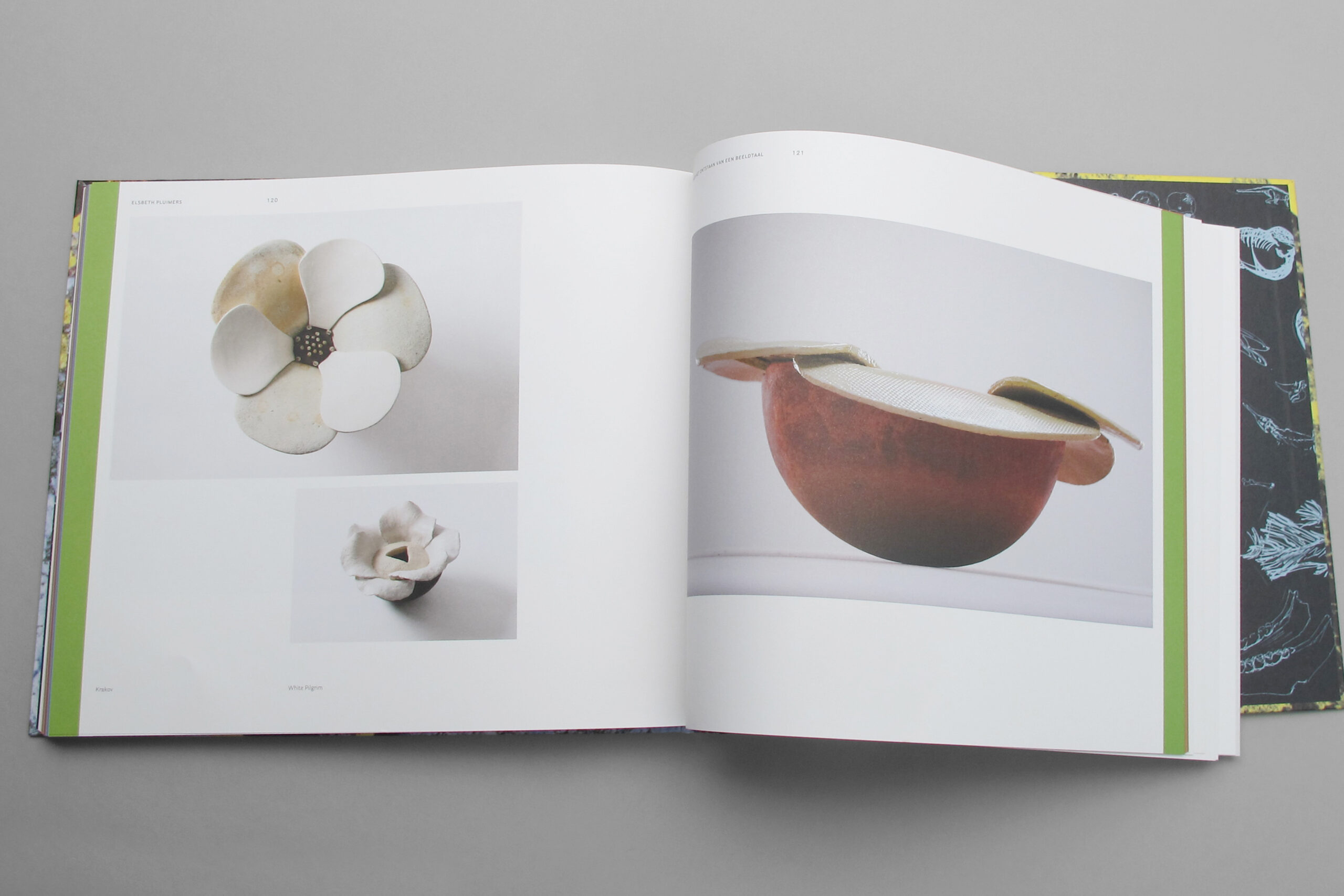
This beautiful printed full colour book with a 150 photo’s, is divided in 16 chapters.
Statement by John de Vos:
“The book is made up of layers, like the Earth’s layers, and each chapter has a different colour. She is not penetrating the Earth, but is going deeper into her life of art. Geology is the theme running through her work. She unwinds the balls of wool and plays with them as she continues her journey, her Odyssey.”
The preface is written by paleontologist dr. John de Vos and the epilogue by dr. Jelle Reumer, emeritus professor at Utrecht University.
To order: mail art@elsbethpluimers.nl
The English and Chinese translations are included.
Price € 35,- (excluding shipping)
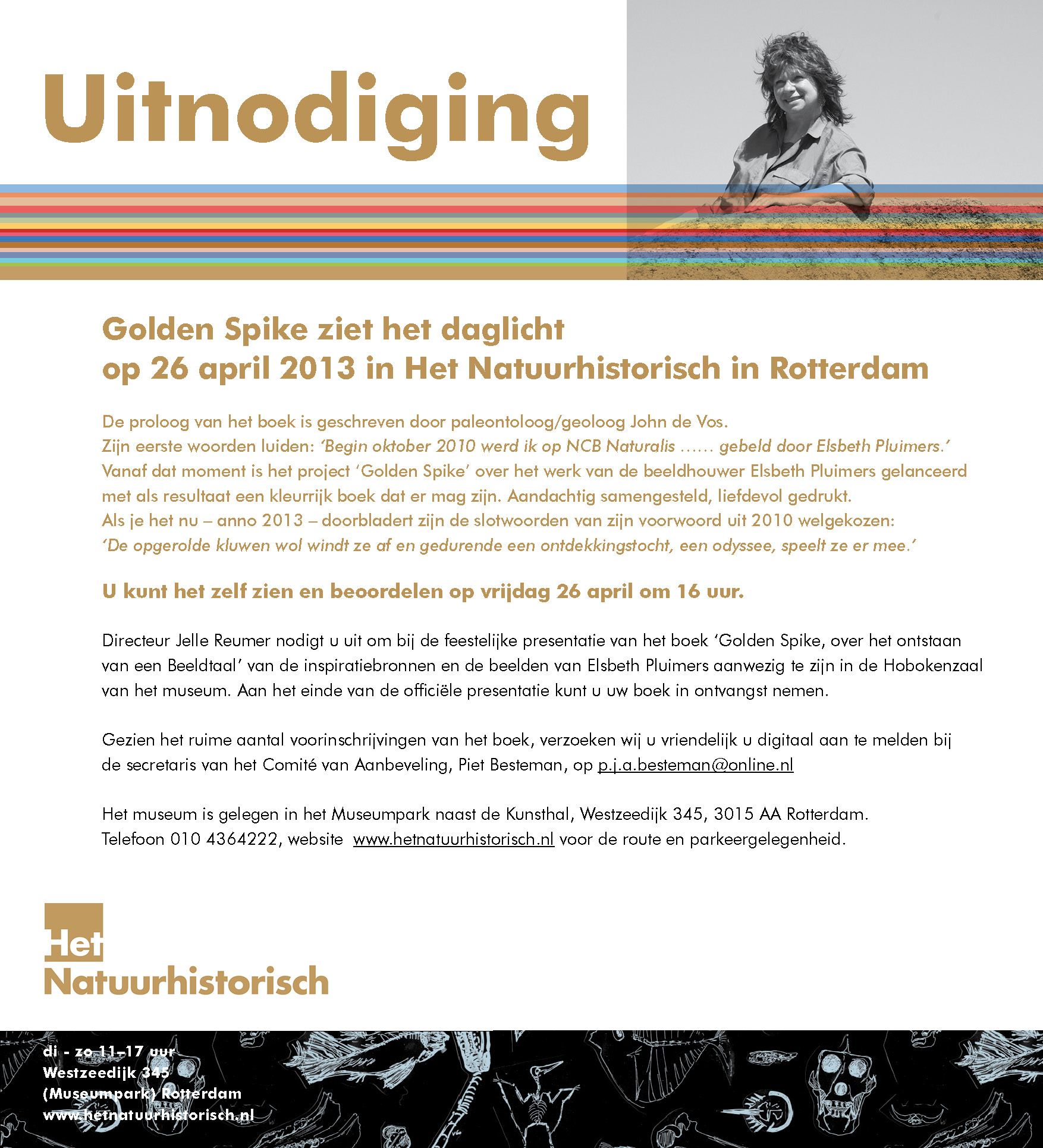
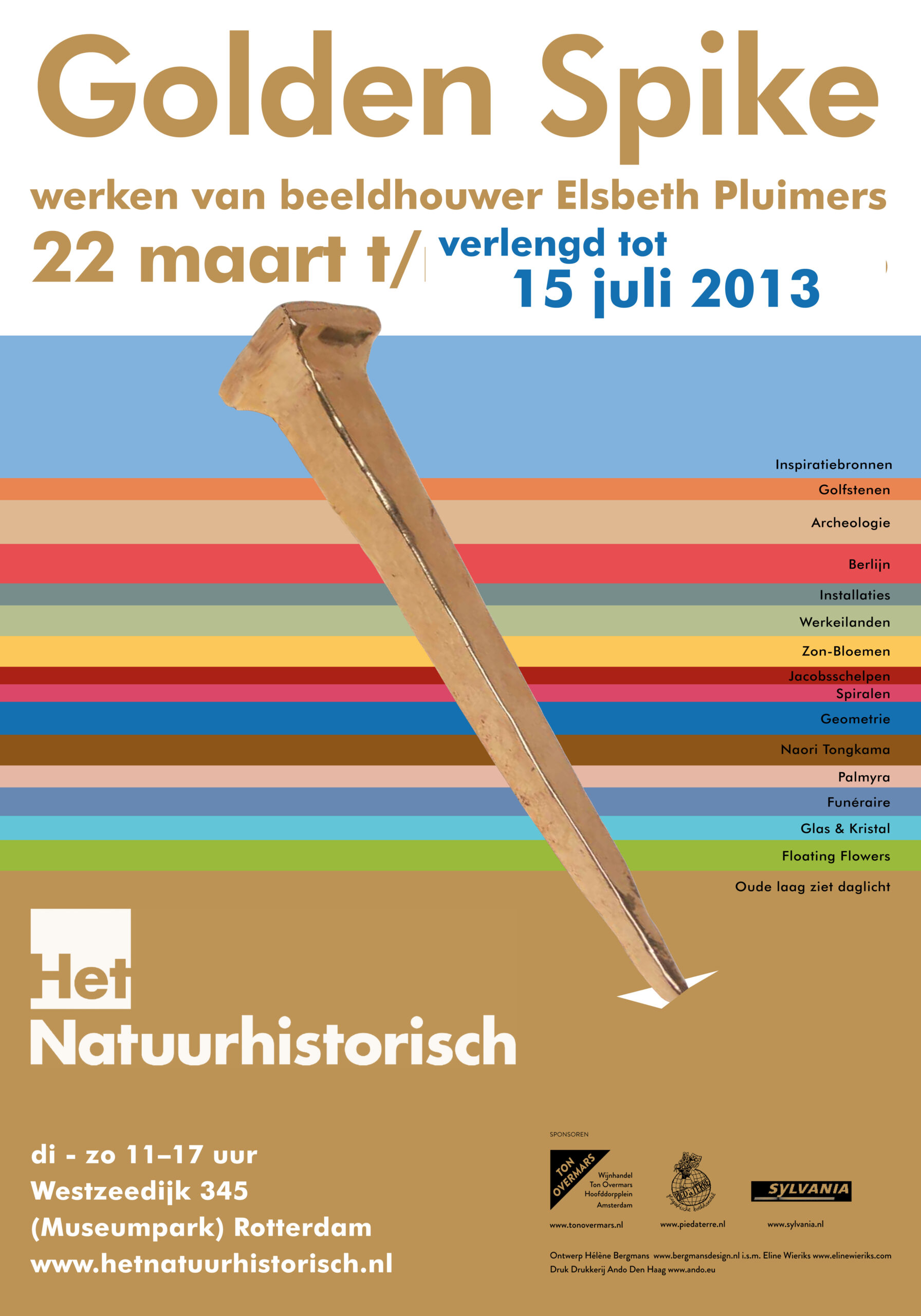
From the press release of the Natural History Museum Rotterdam:
“Under the title ’Golden Spike’ biologist/geologist Elsbeth Pluimers shows a visual language of her fascination with the creation of the Earth. From her knowledge of earth sciences and of Asian traditions, she makes her works in clay, bronze and glass.
Her quest started once in the fossils cabinet of Teylers Museum (Haarlem) and got direction by finding a volcanic bomb in the Auvergne (France). “
A visit to the island Groix (South of Brittany, France) gave a new impulse. Touching the coats of michaschist she got the injection to realize the sculpture ‘Qui voit Groix, voit sa joie!’
All part of ‘Find your place on Earth and ride it!’
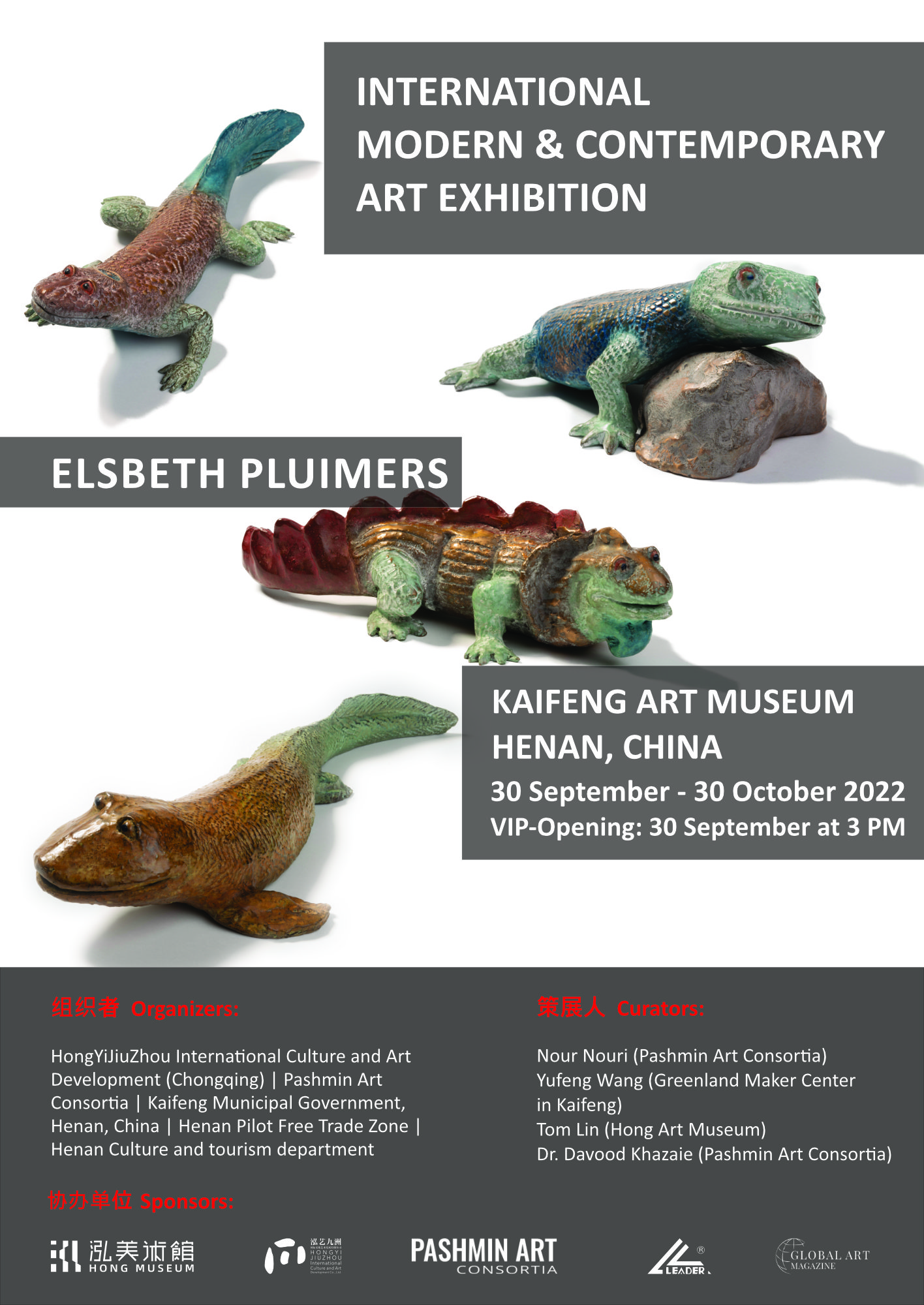
Captivated by the transition from life in water to life on land, she came in contact with the story of Neil Shubin and finding the fossil Tiktaalik. The spark for the serial ‘Tiktaalik and his friends’.
To put an umbrella over this stage and to spend an expression of awe for the coherence and continuity of life, she developed the Evolution Temple. The evolution in a nutshell of 15 cassettes in a round cupola.
The recent piece of art ‘Oval cupola with 30 birds’ is next step in the ‘voyage of the artist’, inspired by
‘The canticle of the birds’ a Sufi poem written by Attâr.
Her book ‘Golden Spike’ is composed of coats, like those of the Earth, and each coat has a different colour. She does not penetrate the Earth, but delves into its artistic life.
Other and previous publications
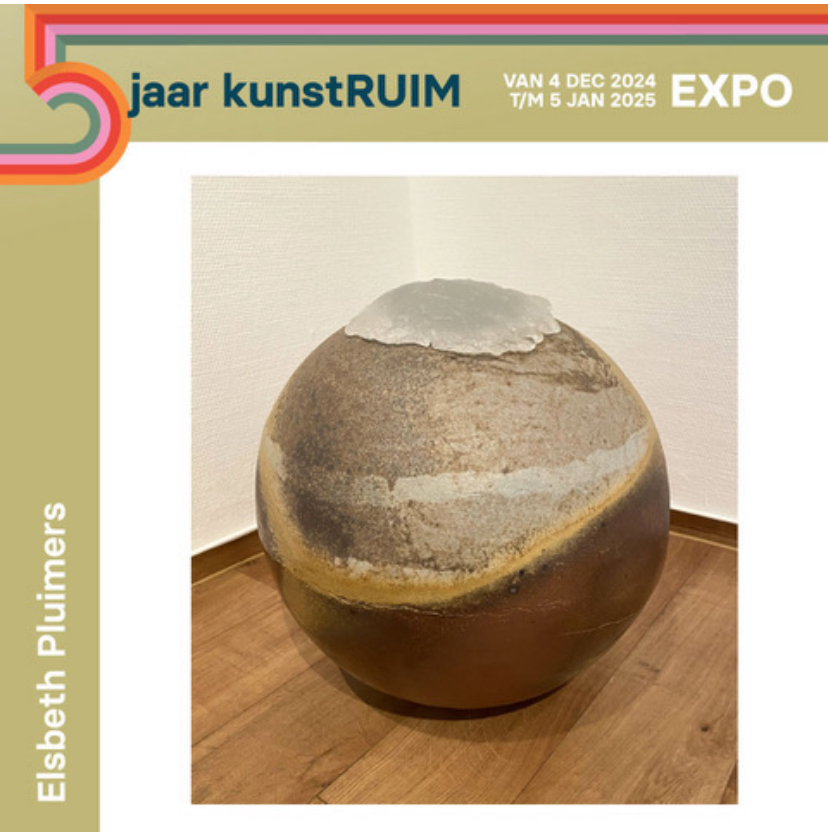
2025 – Group Exhibition ‘5 jaar kunstRUIM Amsterdam’
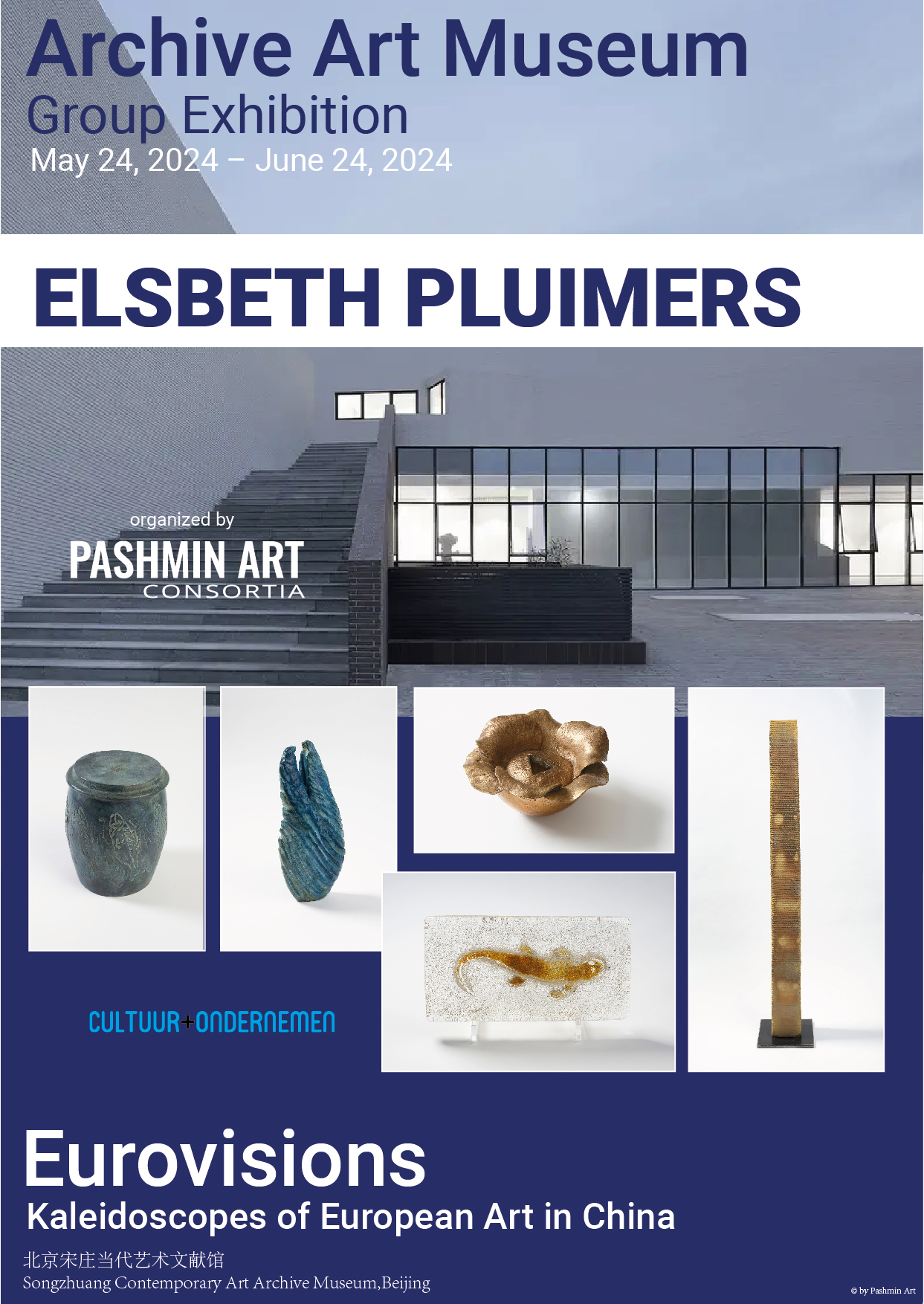
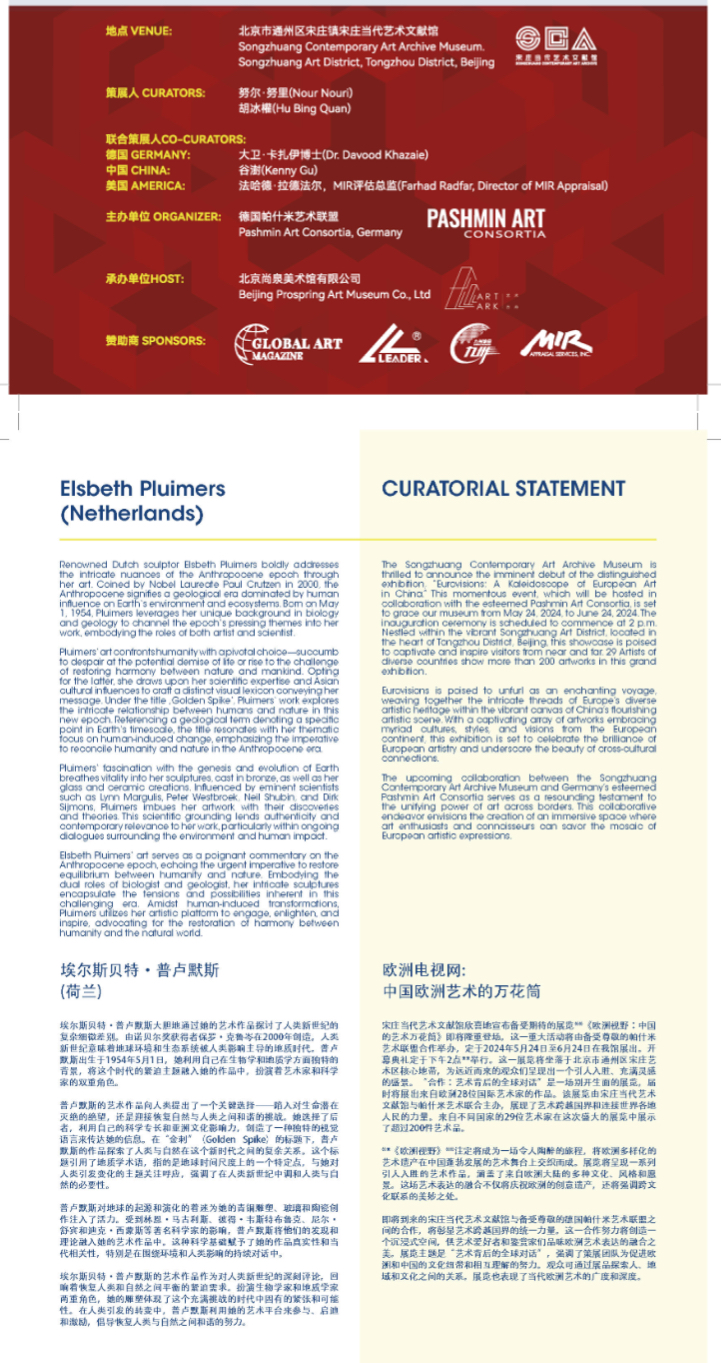
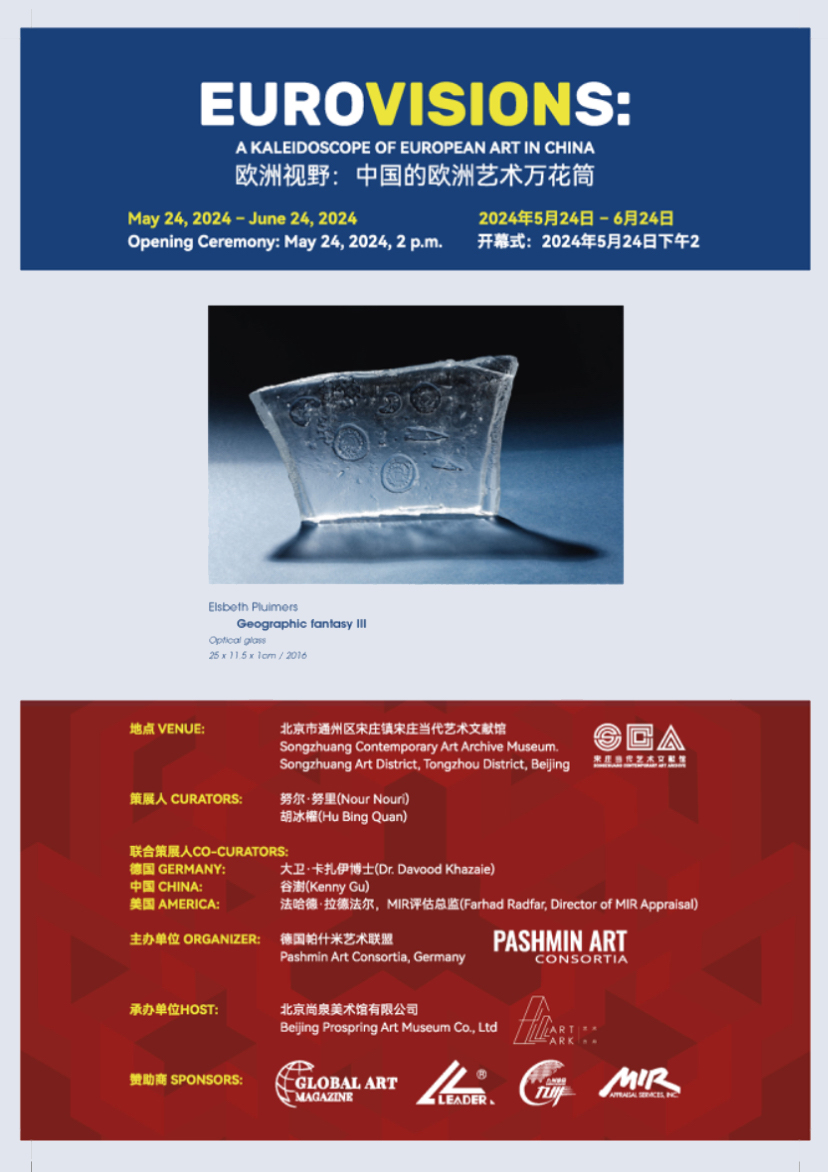
2024 – Group Exhibition ‘Eurovisions Kaleidoscopes of European Art in China’
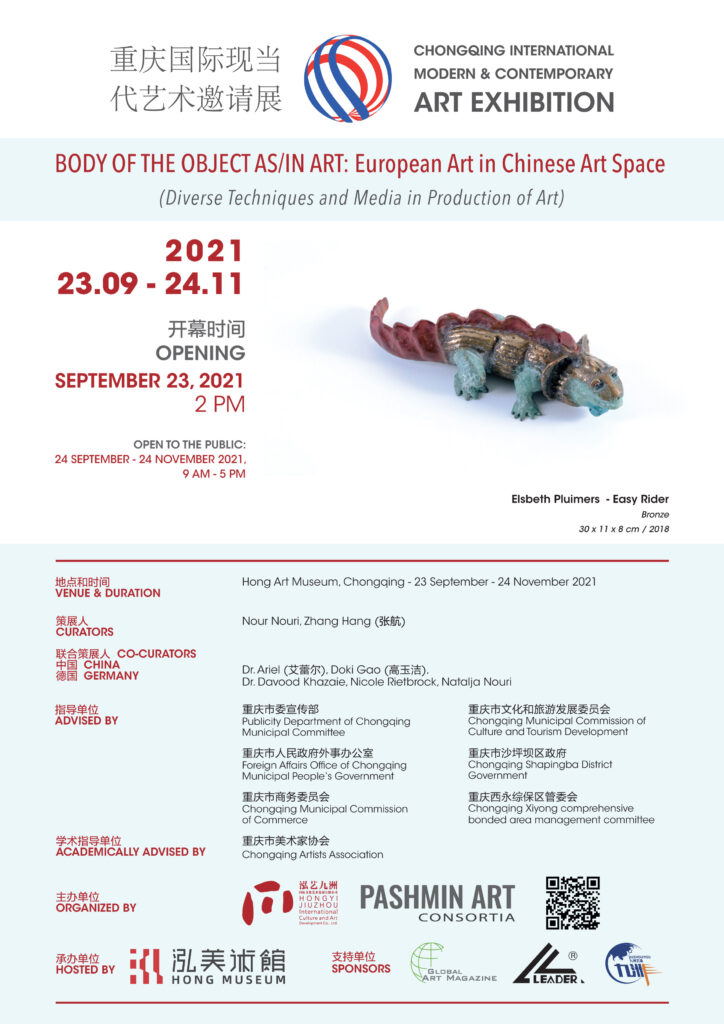
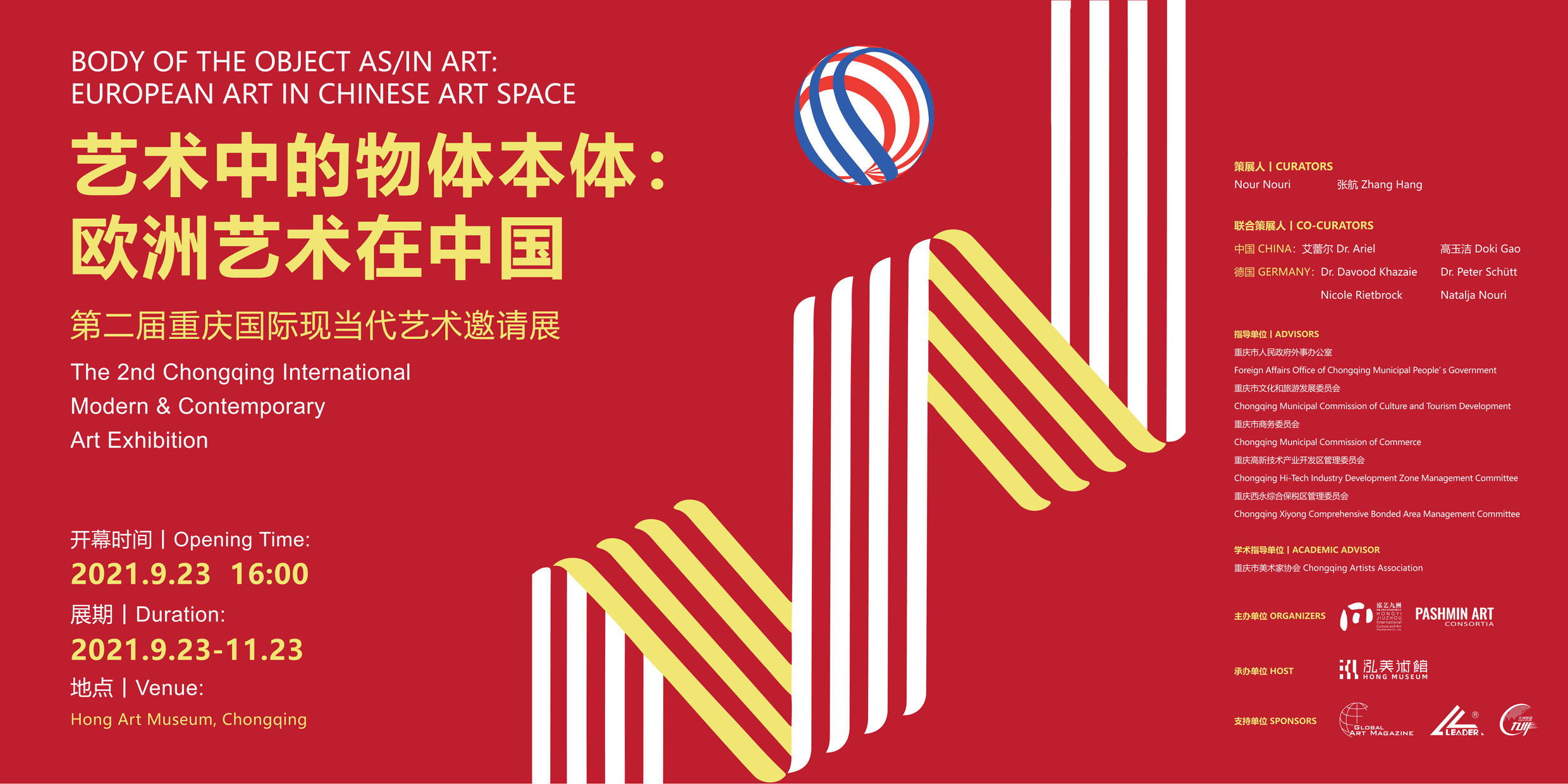
2021 – Exhibition in Chongqing – Hong Art Museum
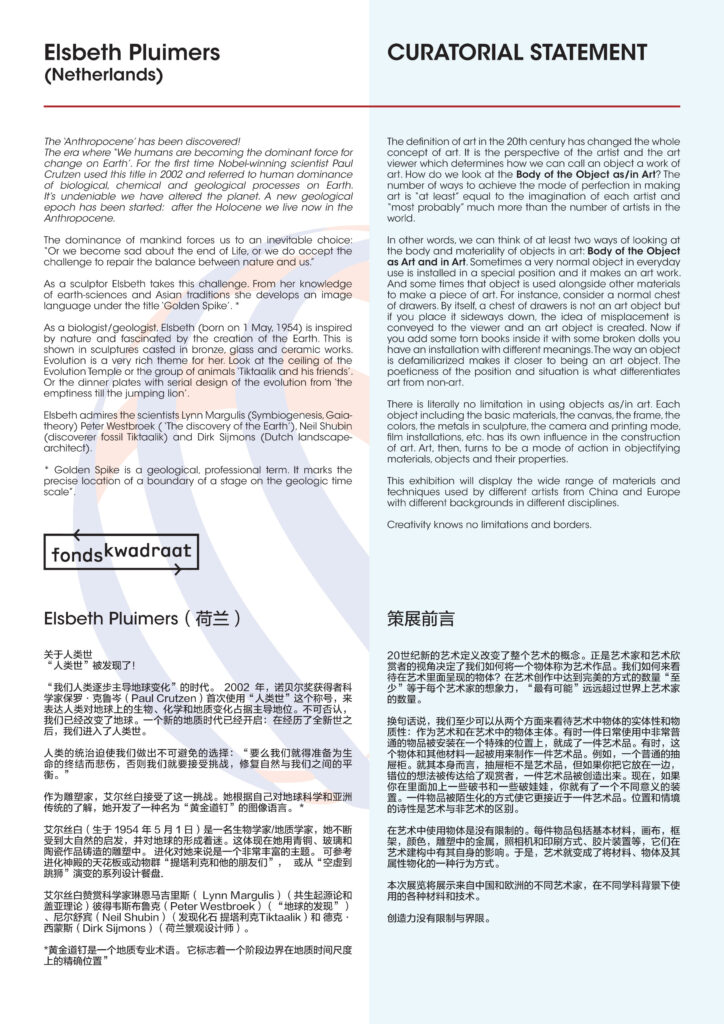
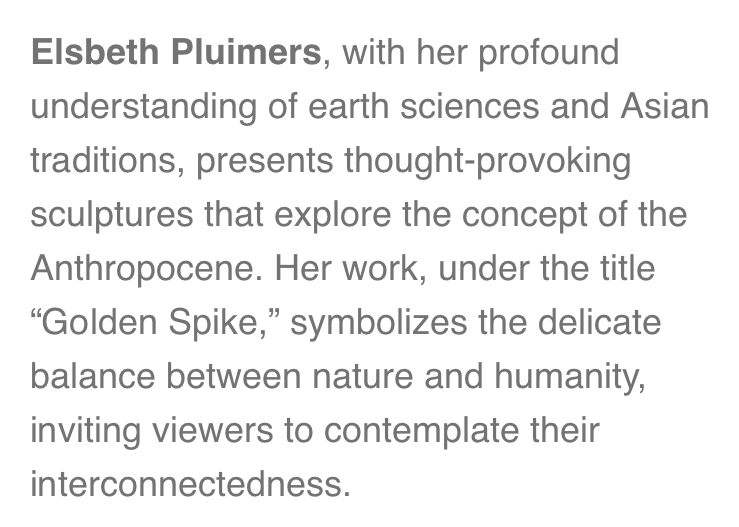
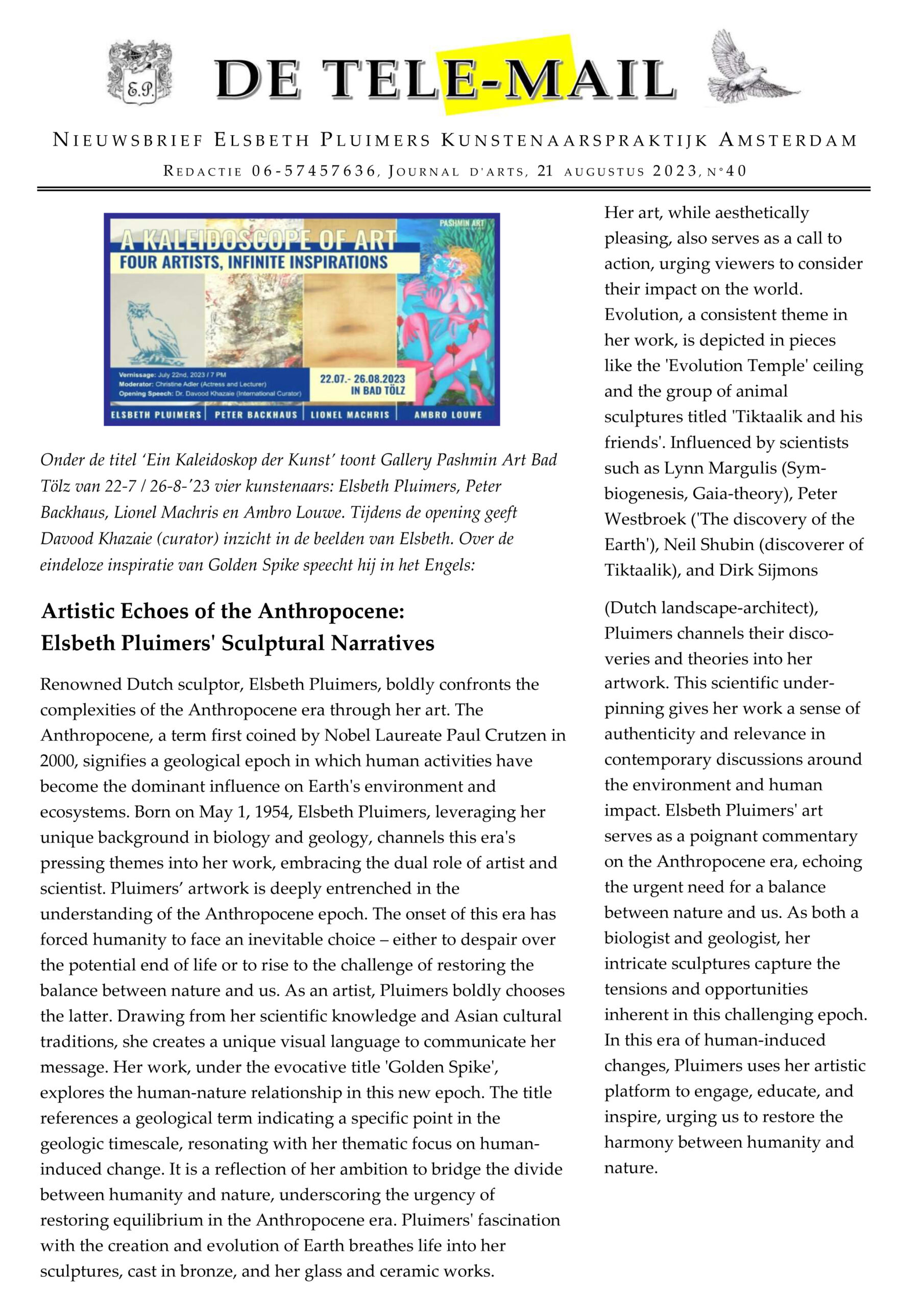
Davood Khazaie, Pashmin Art, Hamburg (GER) – [read] Artistic-echoes-of-the-anthropocene
https://vrijetijdamsterdam.nl/cultuur/het-verhaal-van-kunstenaar-elsbeth-pluimers/
Elsbeth Pluimers and Conference of the birds
Written by GLOBAL ART MAGAZINE editorial team in Hamburg
Three people are involved in the “Conference of the Birds” project:
The artist Elsbeth Pluimers, the architect Piet Besteman and the recently deceased graphic artist Eric Hamburg.
Elsbeth Pluimers is an artist and sculptor. She was born in 1954 in Hengelo, Netherlands. She went to university to study Biology and Geography. From 1980 to 1985, she studied at university of the Arts, more specifically in the sculpture department in Amsterdam. She specialized between 1985-1988 at the Rijksacademie (Amsterdam), where Shinkichi Tajiri offered her to join ‘Klasse Tajiri’ in Berlin (1987/1988).
She is inspired by nature and fascinated by the creation of the earth. This translates into sculptures cast in bronze, works in glass and ceramics. Golden Spike is a professional geological term. It marks the precise location of the limit of a stage on the geological time scale that´s why she calls her book Golden Spike. The book is composed of coats, like those of the Earth, and each coat has a different colour. She does not penetrate the Earth, but delves into its artistic life. Geology is the theme that runs through her work. The preface is written by palaeontologist John de Vos and the epilogue by Jelle Reumer, professor at Utrecht University.
The Conference of Birds
The Conference of the Birds (Persian: Mantiq at-Tayr) is a collection of medieval Persian poems written by the Persian Sufi poet Farid al-Din Attar in 1177. It is in the form of an allegory and consists of about 4,500 couplets.
In Persian the term “Simorgh” is ambiguous meaning the great bird Simorgh and also thirty (in Persian “si”) birds (in persian, “morgh”). Elsbeth was inspired by this poem in creating this grand artwork. This artwork represents some birds searching for their sovereigns. The birds of the world gather to decide who is to be their sovereign. The hoopoe suggests that they should find the legendary Simorgh. “Dear hoopoe, welcome! You will be our guide; / It was on you King Solomon relied …”
He tells the birds that they have to cross seven valleys in order to reach the mountain Kaf. But despite their trepidations, they begin the great journey.
On the way, many perish of thirst, heat or illness, while others fall prey to wild beasts, panic and violence. Those that continue reach the mountain to learn that Simorgh the king is, in fact, each of them and all of them.
For this artwork, the artchitect was inspired by the dome of San Carlos Alle Quattro Fontana, the church of San Carlo alle Quattro Fontane, dedicated to Charles Borromeo. It owes its name to the crossroads at which it is situated and whose four corners are decorated with a fountain representing the Tiber and the Arno on the one hand, and Diana and Juno on the other, one of which is integrated into the façade of the church. This work by Borromini is considered to be one of the masterpieces of Baroque architecture. The dome has been modernized. Borromini gave the dome an optical illusion by reducing the size of the boxes of interlocking polygons and crosses. Where he made bands on a heavy brick dome of a thick brick dome.
Piet seeks a mathematical system with prefabricated elements. The dome represent Attar´s Simorgh poem about the birds arriving at Mount Kaf. The first models are made of 80 g paper (70 x 55 cm), and the bird model is made of 300 g paper (145 x 105 cm). The bird model is hanging, but is quite stiff when placed on the ground.
Piet Besteman was the architect of this project and Eric Hamburg was the graphic artist.
For Eric Hamburg time and space were closely linked things that had to remain in balance. Nailing down the one irrevocably called the other. The more tightly time is framed, the less room for the form. The vaguer the time, the more firmly defined the form. Now time has stopped for Eric Hamburg. But at the same time, it has not. Because the forms Eric has made -small adjustments to space- they ‘ll remain.
(In the months following his death on 28 October 21, this thought process continues to occupy us.
How did Eric Hamburg experience time and space? His brother-in-law knows how to sum it up:
“The space; that is what remains.”)
Link: The conference of birds